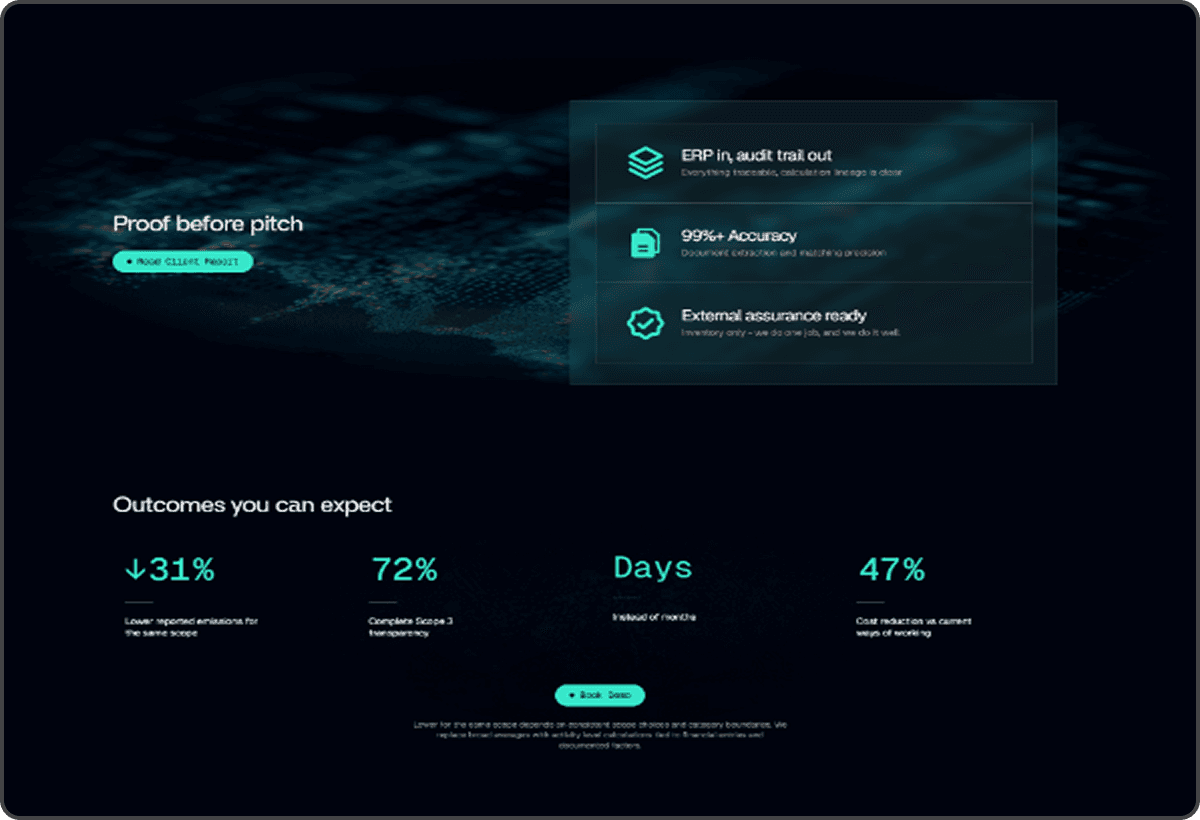
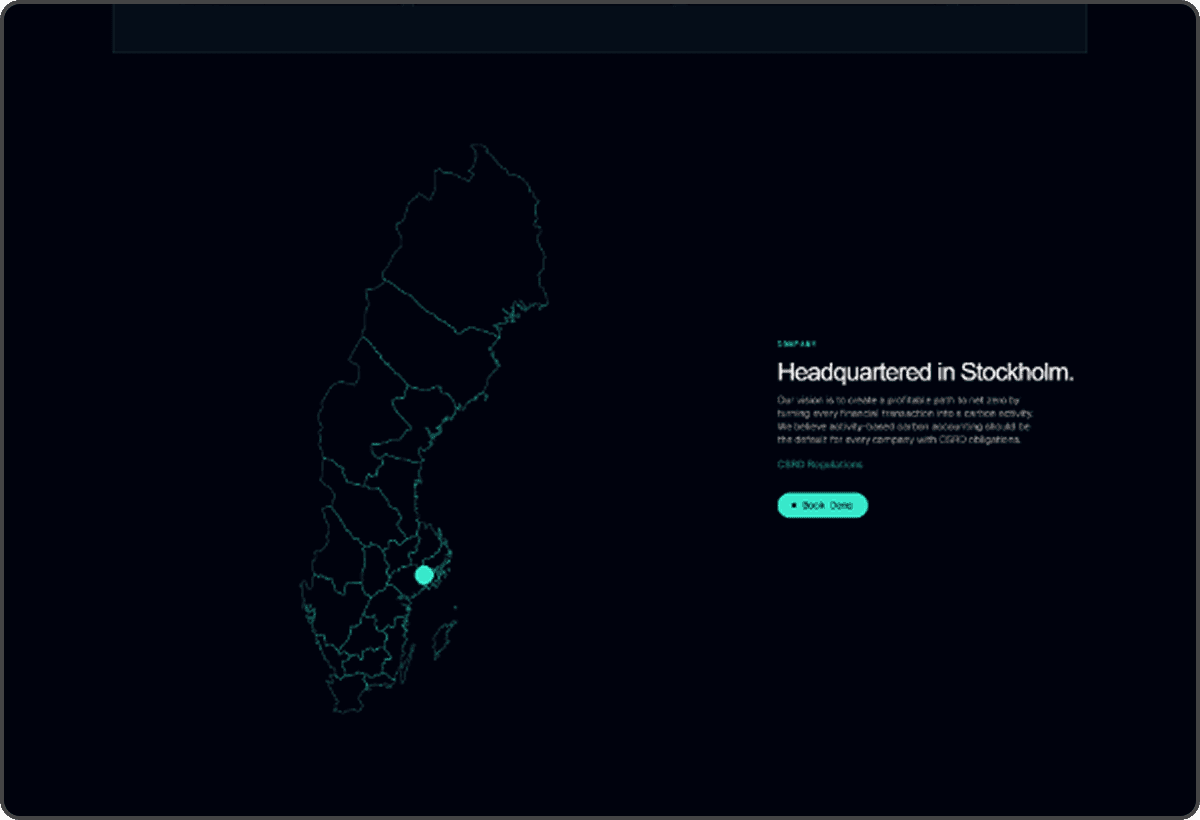
Carbon data intelligence platform

Overview
Bardo is a modern strategy and design studio focused on building adaptive digital products, brand systems, and AI-era experiences. The objective of this project was to translate a high level, conceptual studio identity into a clear, structured, and visually compelling website experience.
The challenge was to balance creative expression with clarity, ensuring the site communicates both innovation and credibility without feeling abstract or confusing.
Problem
Design studios like Bardo often face a common challenge:
Strong conceptual thinking, but difficult to communicate clearly
Overly abstract messaging that reduces immediate understanding
Lack of structured narrative across sections
Portfolio and services not clearly tied to outcomes
Difficulty converting visitors into meaningful inquiries
As a result, users may feel:
“This looks creative, but I’m not fully sure what they actually do.”
Project Goal
The goal of this redesign approach was to:
Make the studio’s positioning instantly understandable
Translate abstract ideas into structured messaging
Improve narrative flow across sections
Strengthen credibility while maintaining a creative identity
Guide users toward inquiry with a clear conversion path
Strategy & Thinking
To solve this, the approach focused on three core principles:
1. Clarity within Creativity
Preserve the studio’s creative identity while ensuring every section communicates a clear purpose.
2. Structured Narrative Flow
Instead of fragmented messaging, the experience was shaped as a guided story:
Who they are → What they do → How they think → Proof → Contact
3. Premium Positioning
The design and content tone was aligned with high-end studios:
Minimal but confident
Editorial layout style
Strong typography hierarchy
Intentional whitespace usage
UX & Information Architecture
Hero Section
Designed to immediately communicate positioning:
Studio identity
Core philosophy
High-level value proposition
The goal was to create a strong first impression without overwhelming the user with abstract language.
About / Philosophy Section
This section translates conceptual thinking into understandable messaging:
Strategy-led approach
AI-era design mindset
Product thinking philosophy
It bridges the gap between creativity and clarity.
Services Structure
Services were reorganized into clear, outcome-driven categories:
Strategy & branding systems
UX/UI design
Digital product experiences
Design systems & scalability
Instead of listing capabilities, each service is framed as a business impact layer.
Work / Proof Section
Portfolio work is presented as:
Context-driven case studies
Clear problem → solution narrative
Outcome-focused storytelling
This improves trust and helps users understand real-world application of the studio’s thinking.
Contact / Conversion Section
The final section focuses on simplicity:
Clear call to action
Low friction inquiry flow
Emphasis on collaboration mindset
Design Execution (Framer)
The site was structured using Framer with a focus on:
Clean grid systems for consistency
Strong typographic hierarchy for editorial feel
Smooth scroll-based flow
Responsive-first layout structure
Modular sections for scalability
Outcome (Design Impact)
This approach improves:
Faster understanding of studio positioning
Stronger perception of credibility and professionalism
Better storytelling across complex ideas
Improved user engagement through structured flow
Higher conversion potential through clarity
Key Insight
Creative studios often don’t fail because of weak design — they fail because:
They communicate ideas without enough structure for users to understand them quickly.
This project focused on turning conceptual creativity into structured clarity without losing artistic identity.
Key Takeaway
This project strengthened my approach toward designing for high-end creative studios, where visual precision and brand expression are equally important. It also enhanced my ability to structure abstract ideas into clear, compelling narratives that communicate purpose without losing sophistication. In addition, it refined my skill in building premium Framer experiences that feel refined, system-driven, and performance-focused. Overall, it improved my capability to balance creative exploration with conversion-focused UX, ensuring designs remain both expressive and strategically effective.